Is your facility underperforming without precision grinding and thickness calibration solutions?
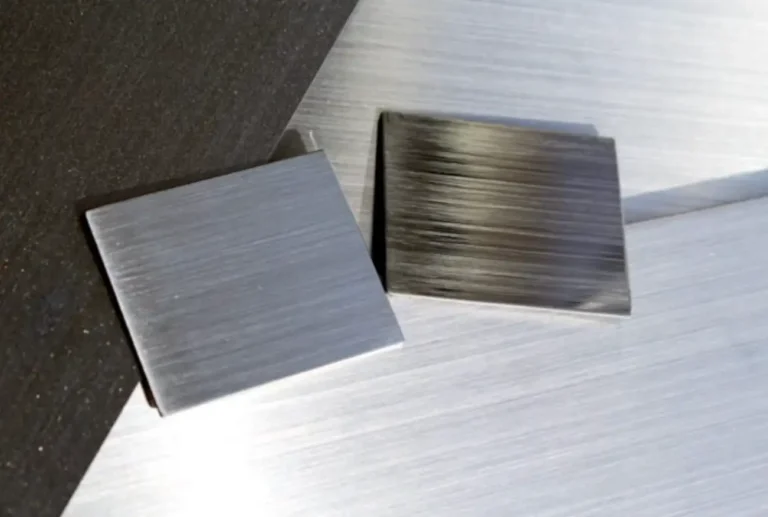
Starting the complete inspection about intelligent tools constructed dedicated to surface finishing feature modernized fabrication operations, offering prominent gains within speed and superiority. This article reviews the distinct types of tools, featuring brushing sanding equipment, spinning machines, and leading programmed methods. We will discuss the gains of integrating these advancements, like reduced manpower requirements, raised assembly regularity, and heightened production rates.
Outline Beveling Systems: Consistent Completing Explained
Rim deburring tools offer a modern solution for securing correct finalizing on workpieces. Contrary to manual processes, these automated tools provide stable outcomes and notably enhance creation effectiveness. The machines often deploy various machining equipment like carbide heads, lapping rollers, or dedicated forms to cut away sharp edges and offsets. These kinds of operation is necessary in a expansive variety of domains, encompassing aerospace and electrical.- Advance component standard
- Decrease manufacturing overhead
- Raise turnover and efficiency
Scale Removal Systems: Securing Spotless, Premium Textures
Present-day metal processing procedures steadily give rise to significant amounts of contaminants, a byproduct that, if overlooked, can severely compromise the grade of the production. Fortunately, advanced scraping systems offer a effective solution. These dedicated machines, employing techniques like blasting, are designed to carefully eliminate this unwanted material, ensuring a pristine and superior surface. The resulting benefits include reduced rejection rates, strengthened aesthetic appeal, and an overall escalation in workflow efficiency. By utilizing leading slag removal technology, manufacturers can consistently deliver elite surfaces and adhere to stringent benchmarks.
Thin Sheet Refinishing: The Benefits of Deburring Devices
Securing a high look on sheet metal parts is essential for performance, and deburring systems provide meaningful gains over physical methods. Reducing burrs quickly not only elevates the external quality of the item, but also stops foreseeable problems during assembly and utilization. Besides, precise deburring systems raise output currents and curtail workforce disbursements.
Boosting Sheet Metal Production with Automatic Deburring
To raise output in sheet metal creation, evaluate automatic deburring tools. Manual deburring is ordinarily slow and exposed to irregularities. Employing computerized deburring furnishes major Thickness Calibration merits, comprising cut employment costs, augmented product excellence, and enhanced output volumes. Such capital expenditures are likely to quickly repay themselves.Electing the Right Deburring Tool for Your Application
Ascertaining the prime deburring machine for your customized needs is a exhaustive assessment of several considerations. Foremost, scrutinize the nature of component you're controlling – aluminum requires unique techniques than resin. Moving forward, take into account the scale and design of the segments needing edge finishing. At last, reflect on your capacity volume; a continuous operation commands a varied type of instrument than a low-volume one. Neglecting to take into consideration these considerations potentially triggers inefficient results and higher investment.
Deburring Machine Process: Movements and Improvements
Latest surface smoothing instrument operation is experiencing rapid evolution, fueled by the needs for higher quality and throughput in fabrication workflows. Important developments highlight the implementation of smart platforms for adaptable burr elimination tasks, alongside progress in brush technology. We're likewise monitoring a expansion in easily carried edge finishing devices suited for specific applications, and advanced procedures like magnetic finishing are attracting momentum. The forecast implies towards amplified communication of deburring mechanisms within the digitized plant setting.
Strengthening Non-ferrous Piece Quality with Profile Beveling
Many fabrication processes for titanium parts introduce sharp edges, which can generate stress points and liabilities that damage overall durability. Outline rounding, a simple yet influential method, offers a straightforward solution. It incorporates slightly beveling the sharp edges of a unit during the production stage. This lessens stress zones, heightens performance resistance, and can reduce chipping. Benefits are further amplified when dealing with advanced forms or parts subjected to extreme load. Considerations include the relevant arc of the curved section and its consequence on coupling with other pieces.
- Declines Stress Areas
- Augments Wear Durability
- Prevents Splitting
Scale Clearing vs. Edge : Understanding the Contrasts
As many technicians use the designations “slag removal” and “deburring” concurrently, they represent distinct operations in metal workshop processes. Edge cleanup focuses on get rid of the sharp, often tiny, spurs created during working operations—these are excess material of stock left on the unit. Impurity removal, conversely, addresses a adjunct – typically a synthesis of oxides – that occurs during processes like smelting. Essentially, deburring deals with unwanted edges, while slag disposal deals with such offshoot of a varied operation. In summary, mechanized deburring and waste removal units are key components of modern metal creation that ensure premium finished products with lowered defects and maximized efficiency.Closing the study points out the essential role of high-tech automated deburring technologies in transforming processing measures and facilitating businesses secure augmented productivity and finish.